
StubStack: Bugonia

Bugonia is one of the year’s best films.
The new work from Yorgos Lanthimos stars Jesse Plemons as an aggrieved conspiracist who, along with his autistic cousin (played by newcomer Aidan Delbis), hatches a plan to kidnap Emma Stone’s character, a wealthy and powerful corporate CEO.

To say more about the plot would spoil the experience, since much of the film’s pleasure comes from trying to guess what might happen next — what’s true, what’s delusion, and who, if anyone, is actually “right.”
Like One Battle After Another and Eddington, Bugonia dives headfirst into the chaos and paranoia of our modern moment. It’s about conspiracies and the lonely people who cling to them; about widening class divides and the alienating language of corporate power; about the pacification of labor and the resentment of the downtrodden. Lanthimos somehow manages to fit all of this, and so much more, into a film that still feels intimate and character-driven.
At its heart, Bugonia is a story about the relationship between rich and poor, embodied by the combative dynamic between its two leads. The differences in their lives are stark — in their homes, diets, medications, even how they speak. When they finally share the screen, their debates and negotiations echo the larger arguments happening across our society: over inequality, responsibility, and truth itself. The film asks whether real understanding between these worlds is even possible — or if both sides are trapped in righteous echo chambers.
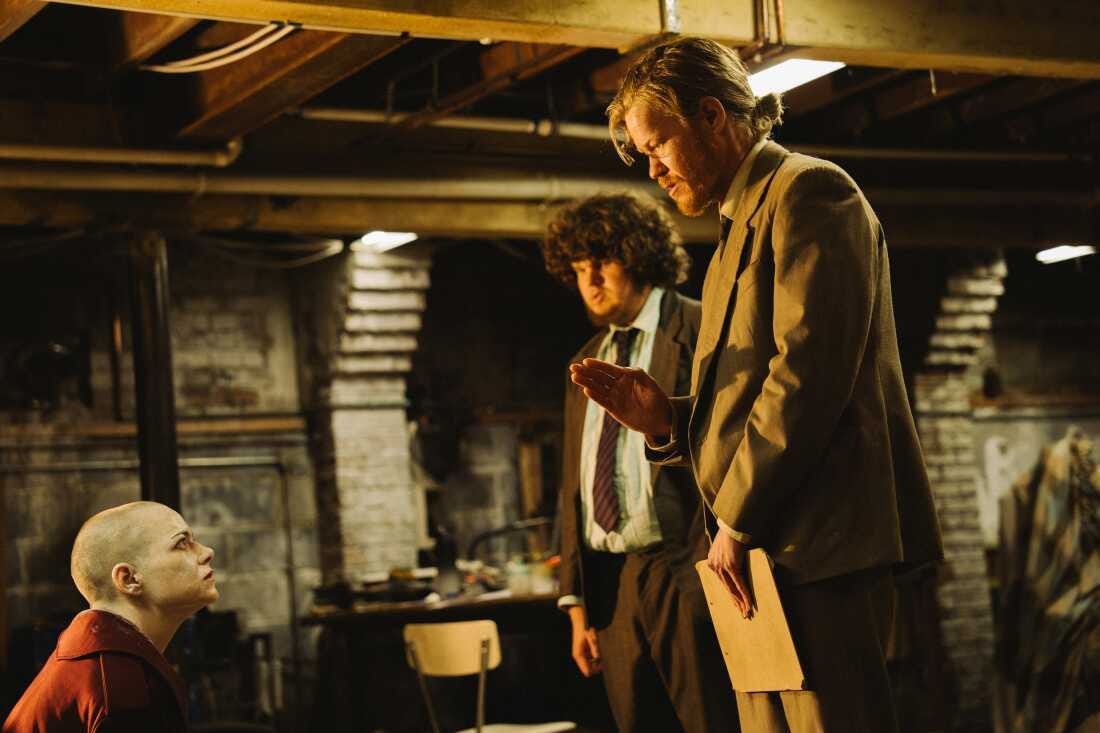
The conversations that fill Bugonia are by turns funny, bleak, frightening, and piercingly insightful. Plemons and Stone are both extraordinary. Stone plays her role with an icy calm — a woman who can’t stop speaking in the empty dialect of corporate diplomacy. She’s all deal-making and damage control, trying to maintain composure in the face of chaos. Plemons, meanwhile, gives one of his most compelling performances to date: his character is delusional but oddly principled, a man who sometimes aims at the right target for all the wrong reasons. He’s like a conspiracy peddling podcaster with an audience of one, his cousin, an image that’s both funny and devastating.
What makes the film so gripping is that both characters are, at different points, sympathetic and repulsive, perceptive and unhinged. The film refuses to offer moral clarity, instead bouncing the audience between their perspectives. It’s easy to agree with one in one moment and recoil from them in the next.
Delbis, in his film debut, is quietly heartbreaking. His character represents the many who are caught in the middle: people without the knowledge or agency to see through the noise, who just want things to go back to how they used to be. His soft-spoken presence brings humanity to the film’s more explosive moments.
And Bugonia does have those moments. For all its dialogue, it’s not just talk. A dinner scene that spirals into chaos is one of the most intense set pieces of the year, and another sequence — essentially a torture scene — is almost unbearable to watch despite showing very little. Lanthimos has always known how to turn discomfort into cinema, and here he perfects it.

Visually and sonically, Bugonia is stunning. Ordinary locations — roads, fields, backyards — are shot with painterly precision. The cinematography finds beauty in banality, while the score, swelling and operatic, inflates even small emotional moments to mythic scale. The result is that the personal feels epic: the quiet power struggle between two people becomes a mirror for the collapse of trust and empathy in our world.
The film’s title, derived from the myth of bees being born from a carcass, hints at its metaphor: a decaying society trying to regenerate itself. The “worker bees” labor for a queen who sees herself as benevolent, but the hive is rotting from within. Lanthimos’s worldview is bleak, sometimes nihilistic, yet unmistakably alive — angry, funny, and uncomfortably true.
I didn’t see the ending coming, and at first I wasn’t sure what to make of it. But the longer I sat with it, the more it resonated. A final note of resignation that feels hauntingly apt. Bugonia captures the madness and moral confusion of our era with both empathy and despair.
See it in a theater, preferably with an audience. It’s the kind of film that will make you laugh, squirm, and leave questioning your own certainties — about power, responsibility, and truth.