
StubStack: Train Dreams

“It’s beautiful. All of it. Every bit of it.”
Clint Bentley’s Train Dreams contains that simple line, and it could easily serve as the film’s thesis. Adapted from Denis Johnson’s novella, Bentley’s film captures both the beauty and the brutality of life — not as opposites, but as two inseparable halves of the same whole.

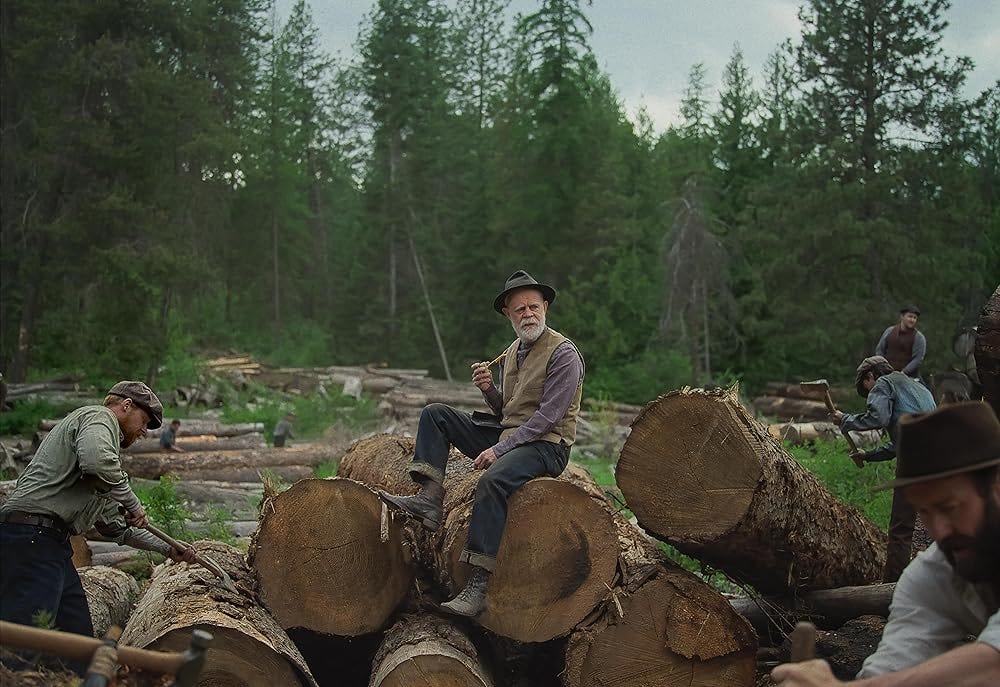
The story follows Robert Granier (Joel Edgerton), a logger in early 20th-century America, as he finds love, builds a life, and endures its inevitable trials and tribulations. Through the rhythms of his labor and the quiet ache of his solitude, Train Dreams becomes less about plot than perspective — a meditation on purpose, impermanence, and the fragile majesty of simply being alive.
Visually, the film is stunning. Bentley and cinematographer Adolpho Veloso render forests, fields, sunsets, and streams with painterly precision. Characters often appear small within vast landscapes — sometimes in the corner of the frame, dwarfed by nature — a recurring reminder that the world is much bigger than our individual stories. The result is immersive and humbling. Nature isn’t just a backdrop here; it’s a character, a mirror, a force. Without its lush visual beauty, Train Dreams wouldn’t work nearly as well.
The film moves at an unhurried pace, inviting the audience to sit with its emotions. It’s quiet and contemplative, yet never dull. The pacing allows for reflection — not just on what’s happening on screen, but on what it evokes within us. As the score drifts in and out like the rhythm of rain, the entire experience feels dreamlike, perfectly befitting the title.
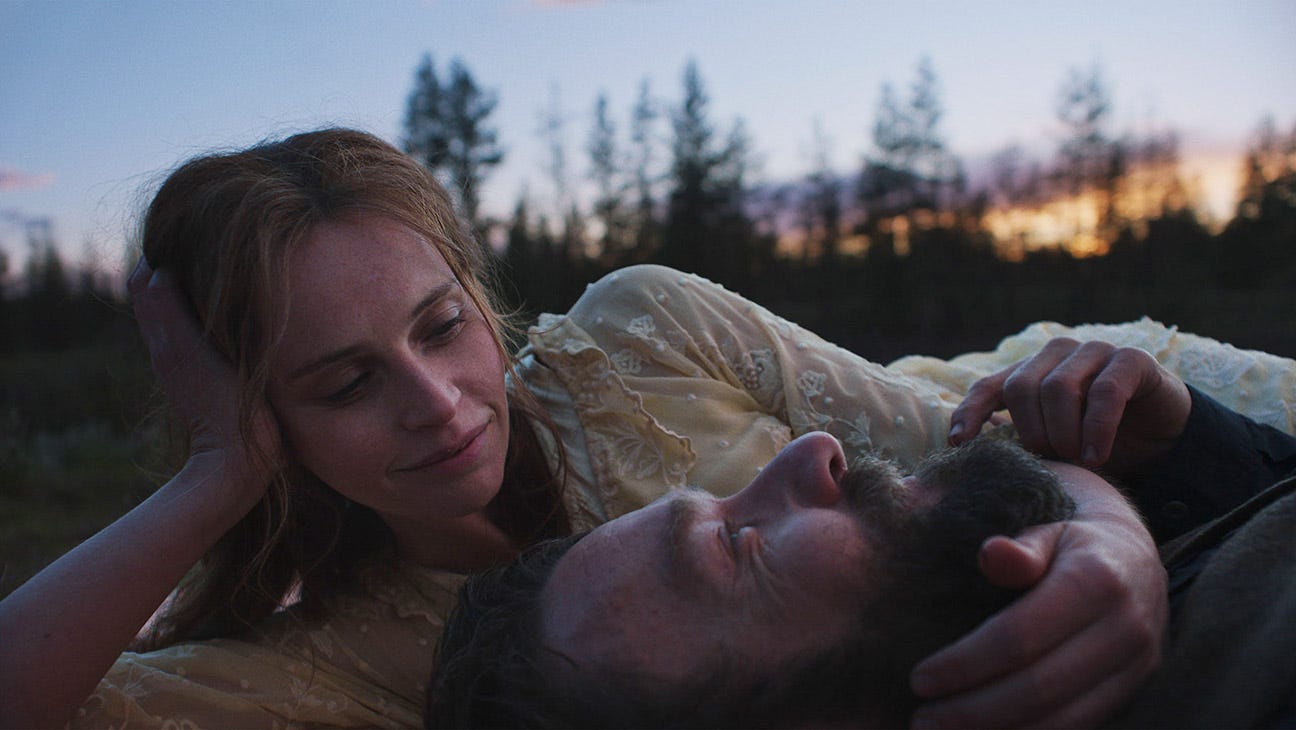
The love story at its core is tender and believable, even though it’s sketched briefly. It’s the kind of loving relationship people strive for. Edgerton’s Robert and Jones’s Gladys share a chemistry that feels lived-in from their first moment together. Their partnership radiates an easy warmth — in glances, half-smiles, and the unspoken understanding that defines the depth of their love.
Edgerton is terrific. With his weathered face and rugged frame, he embodies the archetypal logger, but beneath that hardness lies a quiet vulnerability. He conveys so much through silence — a man both defined and undone by the forces around him. Jones matches him beautifully, her performance a graceful mix of gentleness and grit. Together, they make their family life — bolstered by an irresistibly sweet child — feel achingly real.
Supporting turns add texture throughout. Nathaniel Arcand’s Ignatius Jack, a kind local businessman, lends the film a sense of community and connection, while William H. Macy steals scenes as a quirky, aging lumberman whose humor and hard-won wisdom bring warmth and levity.
Train Dreams could easily have been a sweeping American epic about the hardships of logging and frontier life. Instead, Bentley opts for intimacy. It’s an emotional, quietly profound drama about the beauty and madness of being alive — about the need to appreciate all of it, joy and sorrow alike.
It’s not a film that aims to thrill, though it has its moments of awe. Its power lies in contemplation — in asking us to reckon with the full spectrum of existence, from abundance to desolation, and to recognize that both are part of the same story.
Train Dreams is, quite simply, one of the most beautiful films of the year. Come for the breathtaking imagery; stay for the emotion, the performances, and the philosophy that lingers long after the credits roll. It arrives on Netflix later this month, but if you can, see it on the biggest screen possible. Some films deserve to be felt as much as seen — and Train Dreams is one of them.